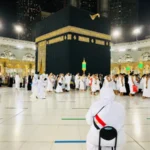
Umrah is a beautiful act of worship that holds immense significance for all Muslims. It’s a beloved sunnah that brings you spiritually closer to Allah.
Umrah shows unity among Muslims. People of different backgrounds gather in Mak’ahs. They worship together with the same purpose and devotion.
First-time pilgrims may feel confused about how to perform umrah correctly. In this complete guide, you will learn how to perform Umrah step-by-step, in a simple and easy way.
Main steps to perform Umrah
Performing Umrah involves a few important acts of worship that must be completed in order. These steps are simple to follow once you understand them properly.
Below is the complete Umrah step-by-step procedure for first-time pilgrims.
- Ihram
- Tawaf-al-Umrah
- Sa’i between Safa and Marwa
- Halq / Taqsir
How to perform Umrah step-by-step
How to perform Umrah step-by-step
Step 1: Ihram
Before getting changed into Ihram garments, it’s sunnah to clip your nails and remove the hair under your armpits and below the navel. You then do Ghusl, which is a great Sunnah for those intending to enter the state of ihram. If you can’t perform Ghusl, doing Wudu will suffice. Men may apply attar/perfume to their heads/beards, ensuring they do not get any on the ihram garments.
Donning Ihram
Men should wear two unstitched white garments: one wrapped around the waist, while the other is draped over the upper body. You may wear sandals that don’t cover the ankle, and you may not wear a cap or turban.
Women may wear any modest clothes that cover them fully, but they should not cover their faces or wear gloves. However, women may wear socks.
Ensure you change into your Ihram attire before crossing the Miqat. You will likely be travelling to Saudi Arabia by airplane.
Changing into the Ihram at home is best. You can also change Ihram at the airport before departure. If you have a stopover, you can change then.
Salah al-Ihram
Performing two rak’ahs of salah before entering into the state of Ihram is Sunnah. This can be performed at home, after getting changed at the airport, or in-flight before crossing the Miqat, provided there are prayer facilities on board. Perform the prayer with the intention of performing two rak’ahs nafl for Ihram. It’s recommended to recite Surah al-Kafiroon (Surah 109) in the first rak’ah and Surah al-Ikhlas (Surah 112) in the second rak’ah, although other surahs may be read.
Intention or Niyyah
After wearing the Ihram and performing two rak’ahs of salah, you should make the intention (Niyyah) in your heart for the umrah. It is also recommended (mustahabb) that you make the intention verbally, as well as reiterating it internally.
اَللَّهُمَّ إِنِّي أُرِيدُ الْعُمْرَةَ فَيَسِّرْهَا لِي وَتَقَبَّلْهَا مِنِّي
(O Allah, I intend to perform Umrah, so make it easy for me and accept it from me)
Talbiyyah
After making your niyyah, you must recite the Talbiyyah loudly, while women should recite it softly.
لَبَّيْكَ اَللَّهُمَّ لَبَّيْكَ – لَبَّيْكَ لَا شَرِيكَ لَكَ لَبَّيْكَ – إِنَّ الْحَمْدَ وَالنِّعْمَة لَكَ وَالْمُلْكَ – لَا شَرِيكَ لَكَ-
(At Your service, Allah, at Your service. At Your service, You have no partner, at Your service. Truly, all praise, favour, and sovereignty are Yours. You have no partner.)
Entering Masjid al-Haram
After reaching Makkah, it is recommended to enter Masjid al-Haram via Bab al-Salam with your right foot first and recite the following dua:
اَللَّهُمَّ هَذَا حَرَمُكَ وَأَمْنُكَ فَحَرِّمْنِي عَلَى النَّارِ، وَأَمِنِّي مِنْ عَذَابِكَ يَوْمَ تَبْعَثُ عِبَادَكَ، وَاجْعَلْنِي مِنْ أَوْلِيَائِكَ وَأَهْلِ طَاعَتِكَ
(Allah, this is your sanctuary and security, so make me unlawful to the hellfire, make me safe from Your punishment on the day You resurrect Your servants, and make me one of Your friends and one of the people who obey You)
Upon seeing the Holy Kaaba for the first time, stay for a moment, raise your hands, and make any du’a with sincerity, as this is one of the places where du’as are accepted.
Reciting the following du’as upon seeing the Holy Kaaba is Sunnah:
اَللَّهُمَّ زِدْ أَهْلَ هَذَا الْبَيْتَ تَشْرِيفاً وَتَعْظِيماً وَتَكْرِيماً وَمَهَابَةً، وَزِدْ مَنْ شَرَّفَهُ وَكَرَّمَهُ مِمَّنْ حَجَّهُ أَوْ اعْتَمَرَهُ تَشْرِيفاً وَتَكْرِيماً وَتَعْظِيماً وَبِرّاً
(Allah, increase this House in honour, esteem, respect, and reverence. And increase those who honour and respect it, of those who perform Hajj or Umrah, in honour, respect, esteem and piety.)
اَللَّهُمَّ أَنْتَ السَّلاَمُ وَمِنْكَ السَّلَامُ، حَيِّنَا رَبَّنَا بِالسَّلاَمِ
(O Allah, You are peace, and from You is peace. Make us live, lord in peace.
Do Dhikr, make da’u and send Salawat upon the Prophet Muhammad ﷺ in abundance.
Step 2: Tawaf al-Umrah
Before starting Tawaf-ul-umrah, ensure you are in a state of Wudu. Make the intention for performing the Tawaf for the sake of Allah. If you are a male, uncover your right shoulder by passing the top sheet of the Ihram under your right armpit, allowing the garment to hang over your right shoulder.
Starting Tawaf
Tawaf begins at the corner of the Kaaba, where Hajar al-Aswad is located. Position yourself in line of Kaaba, where Hajar al-Aswad is placed. Make the intention in your heart to perform Tawaf of Umrah.
Raise your hands and say:
اَللَّهُمَّ إِنِّي أُرِيدُ طَوَافَ بَيْتِكَ الْحَرَامِ فَيَسِّرْهُ لِي وَتَقَبَّلْهُ مِنِّي
(O Allah, I intend to perform Tawaf of Your sacred House, so make it easy for me and accept it from me.)
If you are near Hajar al-Aswad, place your hands on it, kiss it. And say:
بِسْمِ اللّٰهِ وَاللّٰهُ أَكْبَرُ
If you are away from Hajar al-Aswad, perform a symbolic Istilam from afar by directly facing Hajar al-Aswad, raising your hands up to your earlobes, and ensuring your palms are facing it. As though your hands and face are on the Hajar al-Aswad, and say:
بِسْمِ اللّٰهِ وَاللّٰهُ أَكْبَرُ
Turn to the right side and start your Tawaf, ensuring the Kaaba is on your left side. Walk around the Ka’aba seven times in an anti-clockwise direction
Ramal
In the first three circuits, men should perform Ramal, which is the practice of walking briskly, lifting the legs forcefully, and sticking out the chest. However, only perform this Sunnah if you are sure you won’t harm or inconvenience others.
Dhikr & Da’u
During Tawaf, you may recite the Holy Qur’an, prayers, and supplications of your choice. There is no specific du’a to recite in each round.
Upon reaching the Rukn al-Yamani (the Yemeni Corner of the Kaaba), the corner before the corner of Hajar al-Aswad, try to touch it with your right hand if possible.
It’s Sunnah to recite the following supplication between the Yemeni corner and Hajar al-Aswad corner.
رَبَّنَا آتِنَا فِي الدُّنْيَا حَسَنَةً وَفِي الْآخِرَةِ حَسَنَةً وَقِنَا عَذَابَ النَّارِ
(O our Lord, grant us the good of this world, the good of the Hereafter, and save us from the punishment of the fire.)
Returning to Hajar al-Aswad marks the completion of one round. Begin the second round by doing Istilam to Hajar al-Aswad as you did in the first round and saying (اللّٰهُ أَكْبَرُ). You should say (اللّٰهُ أَكْبَرُ) at the end of every round while doing Istilam. You should do Istilam eight times during Ta’waf, one before starting the Tawaf and one at the end of each round.
Note
The Tawaf should be completed at the continuous manner with no interruptions between circuits. However, if a congregational prayer is due to start, you must join the congregation and resume your Tawaf from the position that you stopped. The circuit need not be repeated. These rules also apply if you need to repeat your Wudu.
Completing Tawaf
Proceed in the same manner until you complete seven rounds (Tawaf). Performing Istilam is highly emphasized at the end of the Tawaf, while performing it during the other six rounds is recommended.
Salah
After completing Tawaf, the next step is you need to proceed to Maqam Ibrahim, preferably in a position where Maqam Ibrahim is between you and the Kaaba. However, this area is often crowded, and other pilgrims are continuously moving around the Kaaba. To avoid congestion and difficulty for others, you may prayer the salah anywhere inside Masjid al-Haram. While moving to the place where you intend to perform two rak’ahs. It’s recommended to audibly recite the following verse:
وَاتَّخِذُوا مِنْ مَقَامِ إِبْرَاهِيمَ مُصَلًّى
(And take the Maqam Ibrahim as a place of Salah)
Note
(Men should cover both of their shoulders at this point)
It’s Sunnah to recite Surah al-Kaferoon (Surah 109) in the first Rak’ahs, and Surah al- Ikhlas (Surah 112) in the second Rak’ahs.
Drinking Zamzam
After praying two Rak’ahs, the next step is to drink Zamzam water from the well of Zamzam, which is available around the Tawaf area. Before drinking Zamzam water, make an intention for what you are drinking Zamzam water for. For example, to be cured from an illness.
Multazam
After drinking Zamzam water, you may proceed to Multazam, which is the area between Hajar al-Aswad and the door of the Kaaba.
If you can’t reach the Multazam due to the crowd in the Hajj season, you may face it and supplicate from a distance. However, at other times of the year, it’s easy to access.
If you can reach the Multazam, raise your hands, cling to the wall, and press your chest and cheeks against it.
Step 3: Sa’i between Safa and Marwa
It’s Sunnah to perform Sa’i after Tawaf immediately. Although you may rest if needed. Safa and Marwa are located inside the Masjid al-Haram. Sa’i involves walking between the hills of Safa and Marwa seven times.
Before starting Sa’i, it is Sunnah to perform Istilam of Hajar al-Aswad once more. Then proceed to the hill of Safa. As you approach Safa, it is Sunnah to recite the following verse:
ِإِنَّ الصَّفَا وَالْمَرْوَةَ مِن شَعَائِرِ اللَّهِ
(Indeed, Safa and Marwa are from the signs of Allah)
They say this:
أَبْدَأُ بِمَا بَدَأَ اللهُ بِهِ
(I begin with that which Allah has begun with)
These should be recited once before Sa’i, not at every lap.
When reaching Safa, face the direction of the Kaaba, raise your hands, and make du’a. You may say Taqbir (اَللّٰهُ أَكْبَرُ), Tahlil (لَآ إِلٰهَ إِلَّا اللّٰهُ), and send Salawat upon Prophet Muhammad (ﷺ).
It is Sunnah to recite the following du’a:
اَللّٰهُ أَكْبَرُ، اَللّٰهُ أَكْبَرُ، اَللّٰهُ أَكْبَرُ، وَلِلّٰهِ الْحَمْدُ
(Allah is the greatest; Allah is the greatest; Allah is the greatest, and to Allah belongs all praise)
لاَ إِلَهَ إِلاَّ اللَّهُ وَحْدَهُ لاَ شَرِيكَ لَهُ، لَهُ الْمُلْكُ وَلَهُ الْحَمْدُ يُحْيِي وَيُمِيتُ، وَهُوَ عَلَى كُلِّ شَيْءٍ قَدِيرٌ
(There is no deity except Allah, alone without a partner. To Him belongs the Dominion, and to Him belongs all praise. He gives life, and death, and He has power over everything.)
لَا إِلَهَ إِلَّا اَللَّهُ وَحْدَهُ، اَنْجَزَ وَعْدَهُ وَنَصَرَ عَبْدَهُ وَهَزَمَ اَلْأَحْزَابَ وَحْدَهُ
(There is no deity except Allah alone. He fulfilled His promise, supported His slave, and defeated the confederates alone.)
After reciting the Sunnah du’as, you may recite your own du’a. Read the du’a a total of three times, reciting your own du’as in between.
Walking to Marwa
Walk towards Marwa. During this walk, you will see two green lights. This marks the spot where Hajar fled in search of water. Between these lights, men should walk faster, while women should walk normally.
You may recite dhikr, the Quran, or du’a during Sa’i.
Reaching Marwa
When you arrive at the Marwa, face the direction of the Kaaba, raise your hands, and make du’a as you did at Safa.
This completes one lap of Sa’i. Returning to Safa is considered the second lap.
Continue this process until you complete seven laps, finishing at Marwa.
End of Sa’i
After completing Sa’i, it is recommended that you make a final du’a here and perform two rak’ahs of nafl salah in Masjid al-Haram.
Step 4: Halq or Taqsir
After completing sa’i, the next step is that you must shave your hair (Halq) or trim your hair (Taqsir) at least an inch to leave the state of Ihram, and complete your Umrah.
Shaving the head completely is more virtuous for men, although trimming at least an inch of hair from all parts of the head is also acceptable.
Note
(Women may only have their hair trimmed from the ends).
There are many licensed barbershops in Makkah, which are open 24 hours a day, and usually close during salah times. There are also many barbershops in the Zamzam tour and nearby shopping areas.
Alternatively, you may shave or trim your own hair to come out of the state of Ihram.
Once this is completed, your Umrah is finished.
Table for performing Umrah step by step
You can print or save this table, or write it in your diary to keep it handy, during the Umrah trip, to follow the Umrah guide.
| Step | Action | Short Description |
| 1 | Intention and Ihram | Make Niyyah, wear Ihram, and recite Talbiyah |
| 2 | Enter Masjid al-Haram | Arrive in Makkah, enter Masjid al-Haram with the right foot, and make du’a |
| 3 | Tawaf around the Kaaba | 7 circuits around the Kaaba, starting at Hajar al-Aswad |
| 4 | Two rak’ahs nafl after Tawaf | Pray 2 rak’ahs, ideally behind Maqam Ibrahim |
| 5 | Drinking Zamzam | Drinking Zamzam and making du’a sincerely |
| 6 | Sa’i between Safa & Marwa | 7 laps starting at Safa, finishing at Marwa |
| 7 | Halq/Taqsir | Men shave/Marwa, women trim a small portion of hair |
After completing your Umrah, you are now free from the restrictions of Ihram and may change into your regular clothes. If you want to perform another Umrah during your stay in Makkah, you will need to return to the boundary of the Haram to enter the state of Ihram again. You may go to Masjid Aisha (also known as Tan’een), which is the closest and most convenient place to renew Ihram from Masjid al-Haram.
Also, transportation (taxis) is easily available near this mosque, making your journey simple and accessible.
Congratulations – may Allah accept your Umrah!
After renewing your Ihram, you will once again perform Umrah step-by-step, as explained above in this guide.
FaQs
How long does it take to perform Umrah?
Umrah usually takes 2 to 4 hours, depending on the crowd level inside the Masjid al-Haram. During Ramzan, it may take longer due to large crowds.
Can I rely only on my Umrah package provider’s guide?
Your Umrah package provider can guide you during your journey, but learning how to perform Umrah step-by-step is your own responsibility. Use their help, but still study the Umrah step-by-step yourself.